Sarvagun ERP
Enterprise Resource Planning Platform for Event & Business Operations.
The business and user context
Instead of relying on spreadsheets, WhatsApp messages, and disconnected software, the company now manages its entire workflow from a single platform. The application serves as the central operating system for multiple departments.
Before Sarvagun ERP, employee information was maintained manually, event planning was difficult to track, sales and expenses were in separate sheets, and management had no unified dashboard for business insights.
Build a single, modular ERP platform capable of handling the complete business lifecycle, integrating multiple departments with role-based access control.
What we learned before building
Scattered Event Planning
Event planning was difficult to track, and vendors were managed across different tools.
Siloed Financial Data
Sales and expenses were stored in separate sheets, causing reconciliation issues.
Manual HR Processes
Employee information was manual and HR lacked a centralized workflow for leaves and attendance.
Principles that shaped the experience
Modular Architecture
Divided the system into distinct modules like Event Management, CRM, Finance, and HR.
Role-Based Authentication
Dynamic sidebar permissions ensure users only see what they need.
Interactive Dashboards
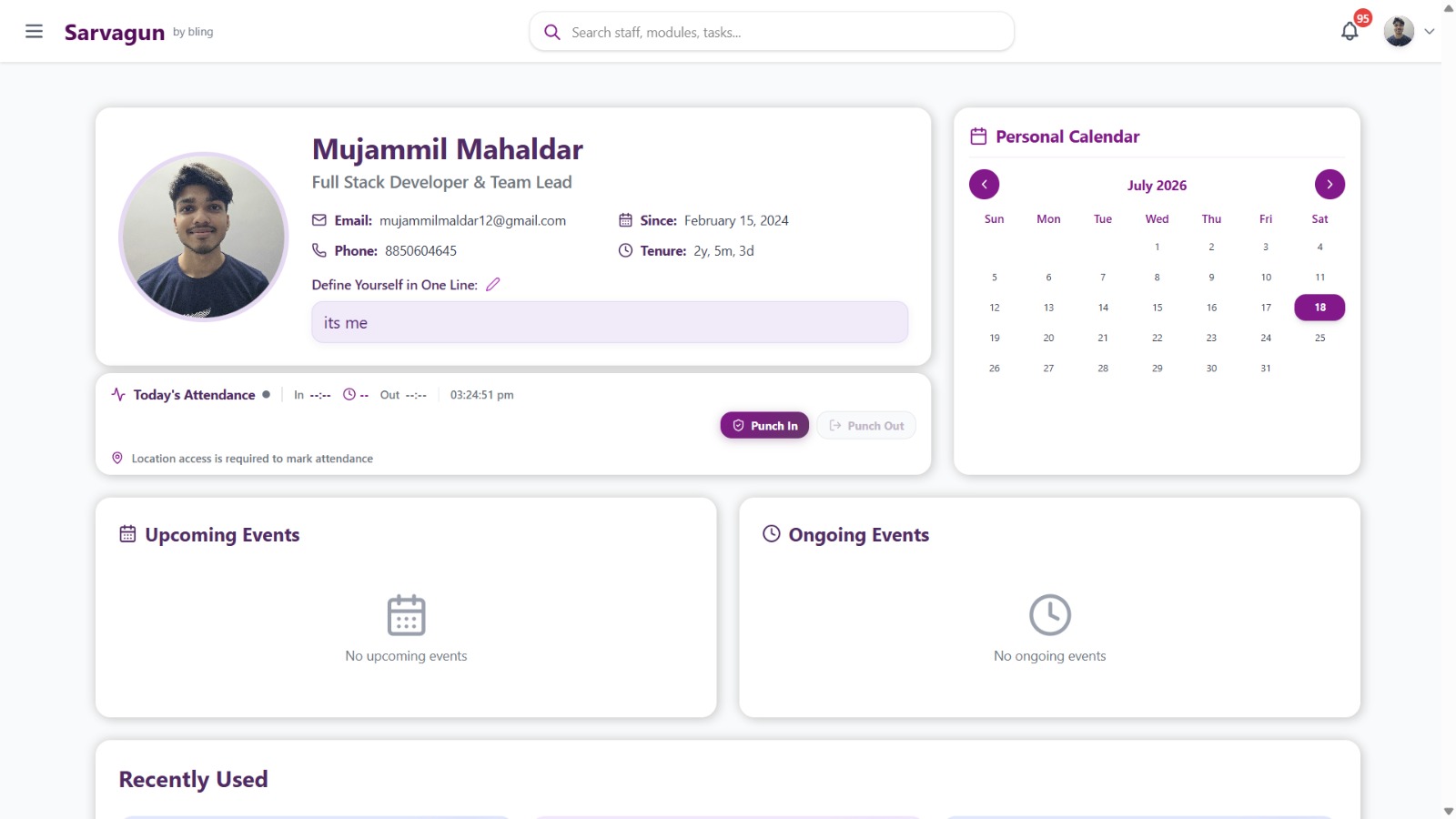
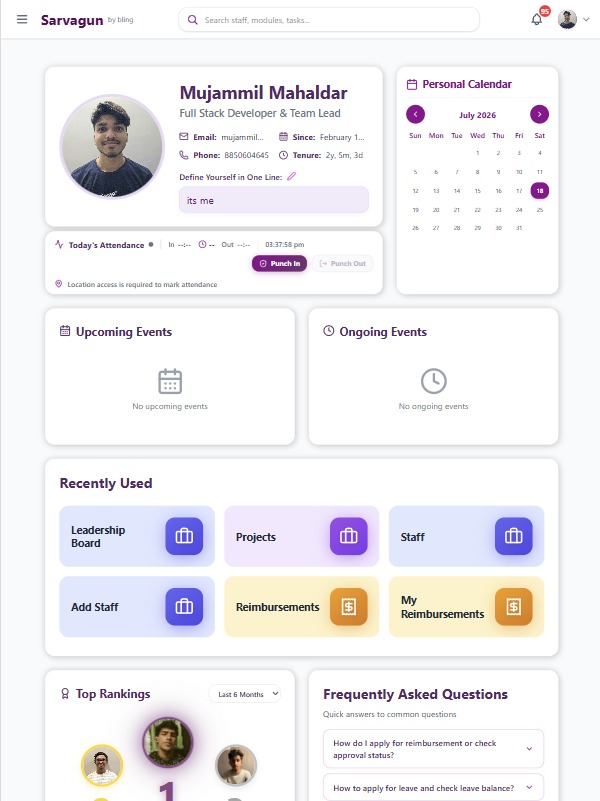
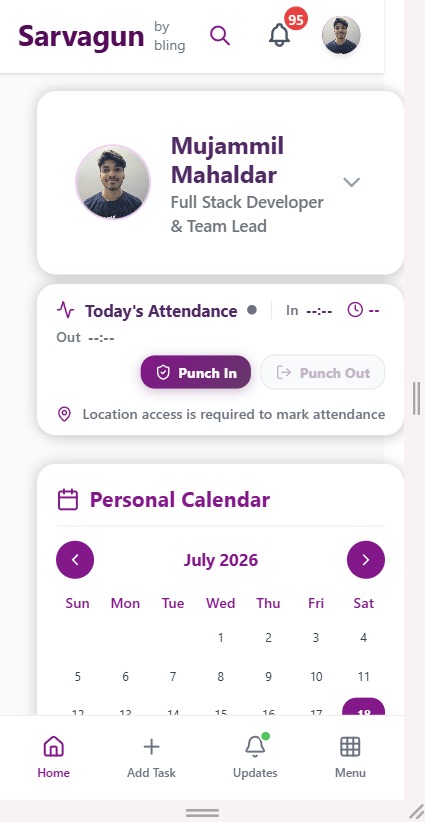
Personalized employee dashboards with quick stats, calendar, and attendance punch-in.
The technical breakdown.
Database & Backend Design
Designed scalable relational database architecture and built the backend using Django, Python, and Django ORM.
Frontend Development
Built interactive interfaces using Bootstrap, JavaScript, AJAX, Chart.js, and GSAP.
Modular Integration
Developed core modules: Event Management, CRM, Vendor Management, Finance, HR, and Payroll.
Deployment & DevOps
Deployed the platform on a Linux VPS using Nginx, Gunicorn, and PM2.
The solution across every screen
Results that moved the needle
Sarvagun ERP centralized multiple business operations into one platform, reduced manual paperwork, eliminated duplicate data entry, and enabled faster decision-making through unified dashboards.
Problems faced, solutions found, lessons learned
Schema evolution during active development
Managed schema changes meticulously through Django migrations and built reusable modular components.
“Modular design ensures future expansion doesn't break existing features.”
Migrating production deployments across servers
Standardized the deployment pipeline using Nginx, Gunicorn, PM2, and GitHub on a Linux VPS.
“DevOps automation is critical for enterprise stability.”
The stack that powered this project
See it in the wild
Explore the live product or review the codebase to see how it was built.